Is a Minibus a Passenger Car or a Truck in Poland? Rules, Driving Licence and Restrictions
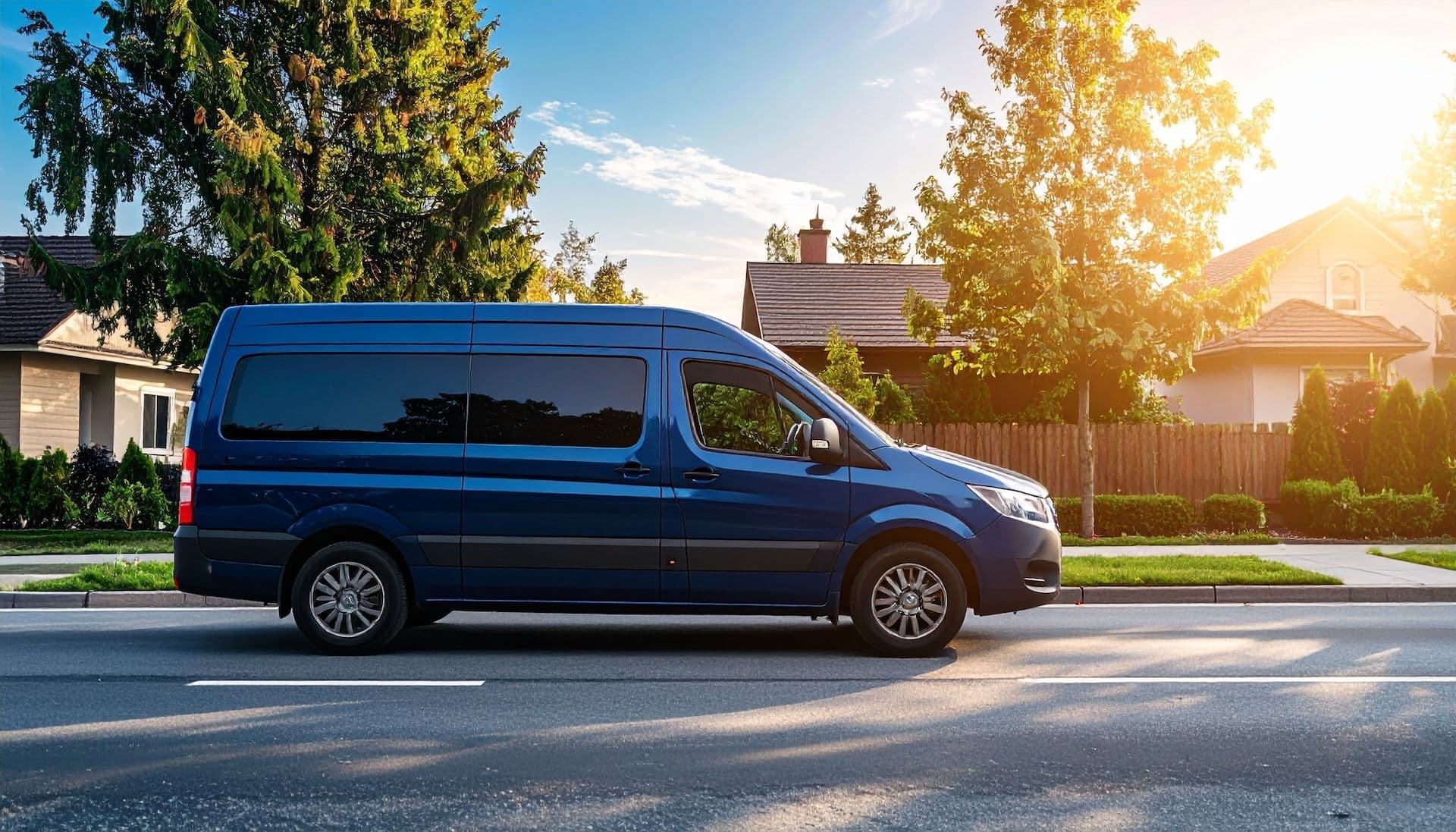
In everyday Polish, the word "bus" covers both a 9-seater minibus for carrying people and a delivery van for moving house. In law, however, these vehicles fall into completely different categories. Is a minibus a passenger car or a truck? And can you drive a 9-seater minibus on a car licence? The answer depends on what the vehicle is designed for and how it is registered. Below, we explain the difference between a passenger minibus and a goods van in Poland, which driving licence you need and what this means for you as a driver.
So it is not the size or appearance of the vehicle that determines its category, but what it is designed for and what is entered in its registration certificate.
The Polish Road Traffic Act (Prawo o ruchu drogowym, Article 2) defines the different types of vehicles as follows:
Under European type approval, this corresponds to categories M1 (passenger cars, up to 8 passenger seats plus the driver), N1 (goods vehicles with a maximum permissible weight of up to 3.5 t) and M2/M3 (buses).
You will find minibuses and vans in several configurations:
| Vehicle type | Number of seats | Category | Examples |
|---|---|---|---|
| 7-seater MPV | 7 | passenger car | Toyota ProAce City Verso, Dacia Jogger |
| 8-seater minibus | 8 | passenger car | passenger versions of large vans |
| 9-seater minibus | 9 | passenger car | Renault Trafic, Ford Transit Custom, Opel Vivaro |
| Delivery van (panel van) | 2–3 | truck | Citroën Jumper, Peugeot Partner, Renault Master |
| Crew cab (double cab) | 6–7 + load bed | truck (combined goods-and-passenger) | double-cab versions |
| Larger minibus (over 9 seats) | 10–20+ | bus | extended passenger versions |
The most popular passenger minibus is the 9-seater: three rows of three seats. This is the maximum number of seats at which the vehicle remains a passenger car and can be driven on a category B licence.
A category B licence (the standard car licence) allows you to drive vehicles with a maximum permissible weight (in Polish: DMC) of up to 3.5 tonnes, designed to carry no more than 8 people in addition to the driver. This means that with an "ordinary" car licence you can drive:
For a goods vehicle with a maximum permissible weight above 3.5 t, you need a C1 (up to 7.5 t) or C licence. For a vehicle carrying more than 8 passengers (a bus or larger minibus), you need a D1 or D licence.
The term "samochód półciężarowy" (literally a "half-truck") does not appear in Polish law. Colloquially, it refers to light commercial vehicles up to 3.5 t – vans, panel vans and pick-ups registered as trucks. Formally, they are simply goods vehicles with a maximum permissible weight of up to 3.5 t (category N1).
Some passenger cars, such as estates, SUVs or MPVs, are converted into so-called "trucks with a grille": the rear seat is removed and a partition is fitted between the cabin and the load area. This is done mainly for tax reasons, because with a goods vehicle a company can deduct the full VAT on its purchase and running costs. However, such a vehicle must meet the technical requirements for trucks and undergo an annual roadworthiness test with additional requirements. It is worth discussing the details with an accountant, as the rules for accounting for company vehicles are fairly complex. You can read more about car costs in a business in our article can car rental be included in company expenses.
Goods vehicles with a maximum permissible weight of up to 3.5 t are subject to the same speed limits as passenger cars: 140 km/h on motorways, 120 km/h on dual-carriageway expressways and 90 km/h on ordinary roads outside built-up areas. Lower limits apply to vehicles over 3.5 t. You will find the full overview in our article speed limits in Poland.
Sign B-5, "no entry for goods vehicles", applies to vehicles with a maximum permissible weight above 3.5 t, unless a plate under the sign specifies a different weight. A delivery van up to 3.5 t can therefore usually enter an area marked with this sign.
Vehicles up to 3.5 t, whether passenger cars or goods vehicles, pay tolls on toll motorway sections at the rates for light vehicles. The obligation to use the e-TOLL system for heavy vehicles applies to vehicles with a maximum permissible weight above 3.5 t.
In a goods van, you can only carry as many people as there are seats listed in the registration certificate, usually 2–3 in the cab. Carrying people in the load area is prohibited.
The choice depends on what you need to transport:
All MobiCars minibuses and vans have a maximum permissible weight of up to 3.5 t, so you can drive them on a category B licence. You rent them with no deposit and with unlimited mileage within Poland, for a day, a weekend or longer.
Yes. A minibus designed to carry a maximum of 9 people including the driver is a passenger car under the Polish Road Traffic Act.
Yes, as long as the minibus's maximum permissible weight does not exceed 3.5 t. A category B licence allows you to carry up to 8 passengers in addition to the driver.
Yes. A van designed to carry goods is a goods vehicle (truck), even if its maximum permissible weight does not exceed 3.5 t.
Yes. The speed limits for goods vehicles with a maximum permissible weight of up to 3.5 t are the same as for passenger cars.
Usually, yes. Sign B-5 applies to goods vehicles with a maximum permissible weight above 3.5 t, unless a plate under the sign specifies a different weight.
As many as there are seats listed in the registration certificate – usually 2–3 people in the cab. Carrying people in the load area is not allowed.
Related articles: