Snow Chains – When Are They Mandatory and How to Fit Them? Poland and Europe
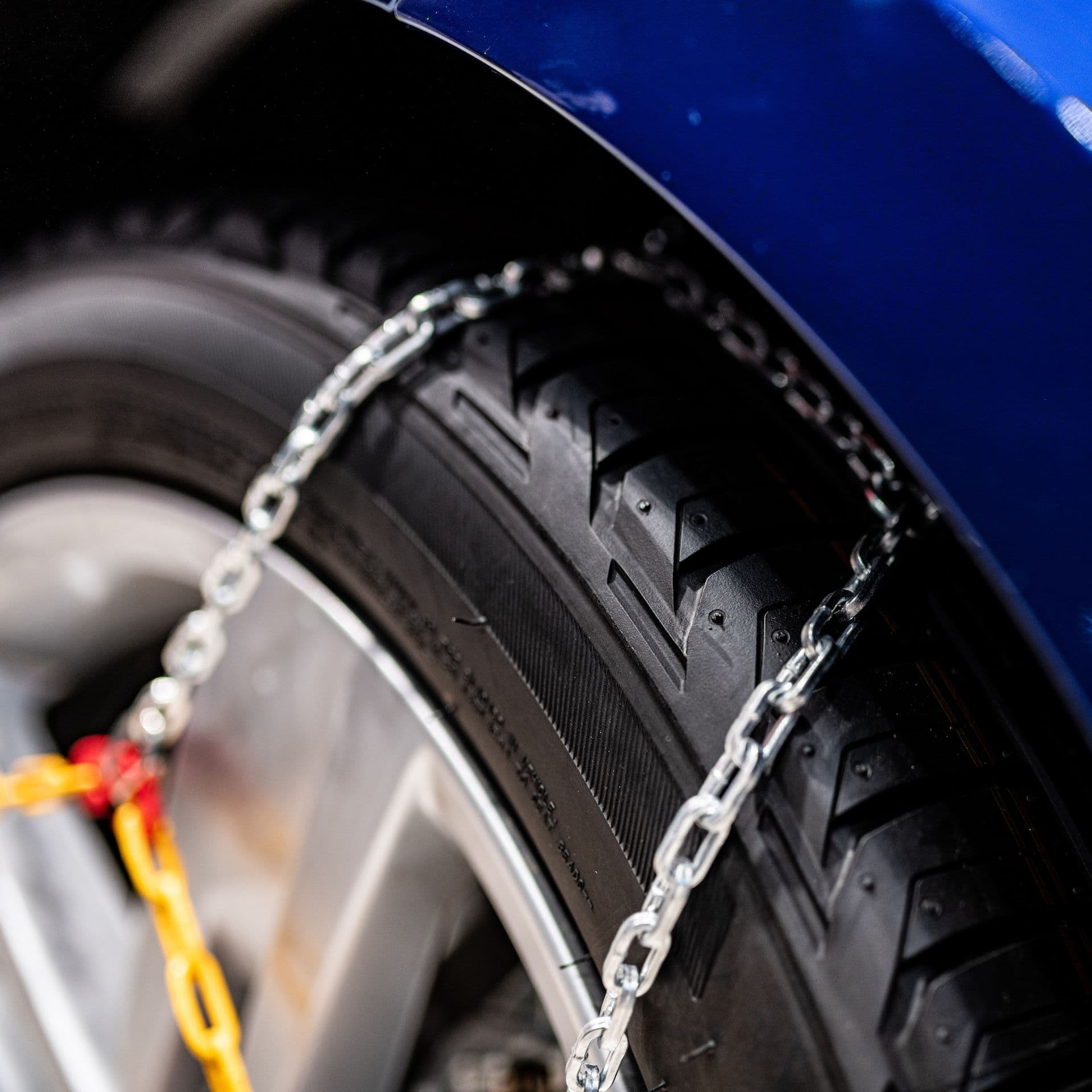
For many drivers, snow chains are a piece of kit that sits in the garage for years. Yet one trip to the mountains in heavy snowfall is enough for them to become the only way to reach your guesthouse or get out of the car park at the foot of the slopes. In some places in Poland and in many regions of Europe, using them is also a legal requirement. Find out when snow chains are mandatory, how to choose and fit them, and how fast you can drive with them on.
In Poland there is no general requirement to carry snow chains in your car. You only have to fit them in one situation: when you see sign C-18, "snow chains mandatory" (officially: anti-skid chains required). It is a round blue sign showing a tyre wrapped in a chain. You will find it mainly on mountain roads, for example in the Podhale region, the Beskids, the Karkonosze and the Bieszczady mountains.
One important restriction: in Poland, chains may be used only on roads covered with snow or ice. Driving on chains on bare tarmac damages the road surface, your tyres and the chains themselves – and it is dangerous, because the car loses grip.
The rules in the Alpine countries are stricter than in Poland. If you are planning a winter break or a ski trip abroad, check what your destination country requires.
| Country | Snow chain rules |
|---|---|
| Austria | In winter conditions (from 1 November to 15 April) your car must have winter tyres. On a road completely covered with snow or ice, you may use chains on the drive wheels instead. On signposted roads, chains are mandatory. |
| Italy | The rules are set by the regions. Usually, from 15 November to 15 April, on signposted roads you must have either winter tyres or chains in the car, ready to fit. |
| France | From 1 November to 31 March, in mountain departments you must have either winter tyres or chains or snow socks in the boot. |
| Switzerland | Chains are mandatory on roads marked with the relevant sign. On mountain passes it is worth always carrying them with you. |
| Slovenia | From 15 November to 15 March your car must have either winter tyres or summer tyres with chains in the boot. |
| Czech Republic and Slovakia | Chains are mandatory on roads marked with a mandatory chains sign. For everyday driving, winter tyres are enough. |
The rules in individual countries can change, so check the current requirements on automobile club websites or official travel advice pages before you set off. You can read more about tyre requirements in our article on winter tyres – rules in Poland and Europe.
You drive slowly on chains. Most manufacturers allow speeds of up to 40–50 km/h, and you will find the exact limit in the instructions for your set. Driving faster risks breaking the chain, damaging the wheel arch, mudguard or brake lines, and losing control of the car. Avoid harsh acceleration, sudden braking and sharp turns.
Chains are a last resort. In everyday winter driving, safety depends on good winter or all-season tyres, a suitable car and a sensible speed. For a trip to the mountains, cars with higher ground clearance and a spacious boot for skis and equipment work well.
If your own car is not suited to a winter journey, you can rent a car for the trip. In the winter season, MobiCars cars are fitted with winter tyres or high-quality all-season tyres, and you can rent without a deposit. Ask whether chains can be used on a specific model when you book, as this depends on the wheel size. You can find a car for your winter trip under rental for days. Planning a ski trip abroad? Also read our guide on driving a rental car abroad, and for the dates of the Polish winter school holidays, see our article on winter school holidays 2027.
No. In Poland there is no requirement to carry snow chains. You only have to fit them on a road marked with sign C-18, "snow chains mandatory".
Sign C-18 means that anti-skid chains are mandatory. It applies until a C-18 sign crossed out in red. A plate under the sign may limit the requirement to certain types of vehicle.
No. In Poland, chains may only be used on roads covered with snow or ice. Once you reach a cleared road, you must take them off.
On the wheels of the driven axle: the front wheels in a front-wheel-drive car and the rear wheels in a rear-wheel-drive car. In 4x4 vehicles, check the manufacturer's recommendations in the owner's manual.
Usually no faster than 40–50 km/h. The chain manufacturer gives the exact limit in the instructions for the set.
In Austria, winter tyres are required in winter conditions from 1 November to 15 April. On a road completely covered with snow or ice, you may use chains instead, and on roads marked with a mandatory chains sign, snow chains are compulsory.
Related articles: