The first frost, a morning before work, the key in the ignition – and just a quiet clicking instead of the engine turning over. A flat battery is the most common winter breakdown. Fortunately, in most cases all you need is a second car and a set of jump leads. We explain how to jump start a car step by step, in what order to connect the cables and which mistakes to avoid.
Car won't start – is it definitely the battery?
The easiest way to recognise a flat battery is when:
- the starter motor turns very slowly or you only hear clicking,
- the dashboard warning lights are dim or flickering,
- the interior lights and headlights are noticeably weaker than usual.
Frost weakens the battery because its capacity drops significantly at low temperatures, and an engine with thicker oil needs more energy to start. However, if the starter motor turns normally but the engine does not fire, the cause lies elsewhere (e.g. in the fuel or ignition system) and jump leads will not help.
What do you need to jump start a car?
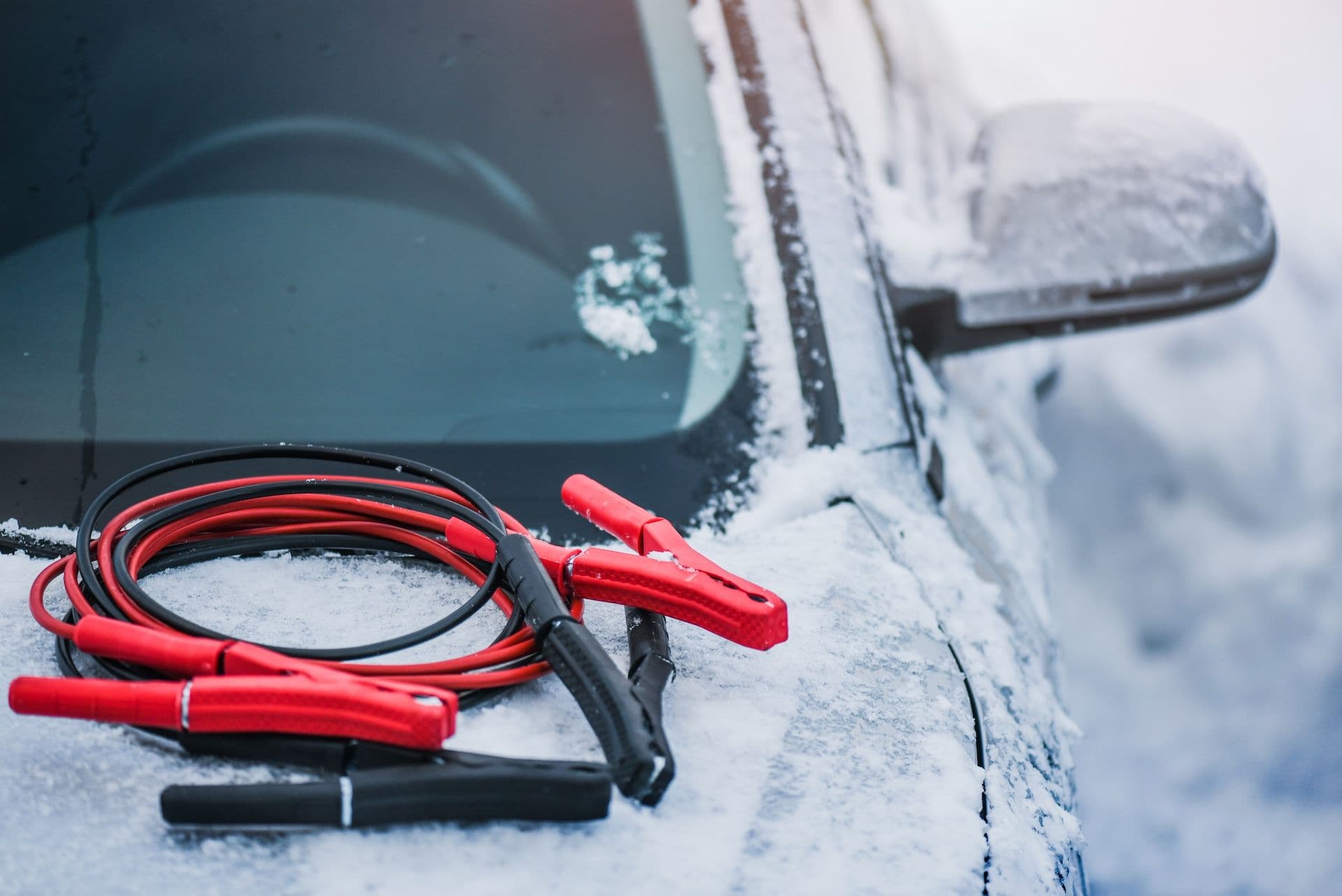
- Jump leads – ideally with thick cables (min. 16–25 mm² for passenger cars) and solid clamps.
- A second car with a working battery of the same voltage (12 V).
- A high-visibility vest and hazard lights if you are standing by the road.
How to jump start a car – the order of cables
The order matters for safety. Remember the rule: red (+) first, then black (−), and the last clamp goes on an earth point of the car with the flat battery.
- Park the cars close to each other, but make sure they are not touching. Switch off the engines, lights, radio and heating in both.
- Red cable to the "+" terminal of the flat battery.
- The other end of the red cable to the "+" terminal of the working battery.
- Black cable to the "−" terminal of the working battery.
- The other end of the black cable to an earth point on the car with the flat battery – an unpainted metal part of the engine or body, away from the battery. In many cars the manufacturer provides a dedicated earth point under the bonnet.
- Start the engine of the donor car and wait 2–3 minutes, keeping the revs slightly raised.
- Start the car with the flat battery. If it does not start, wait a minute and try again. Do not crank the starter for more than a few seconds at a time.
- Disconnect the cables in reverse order: first the black one from the earth point, then the black one from the donor car, the red one from the donor car and finally the red one from the car you have just started.
The most common mistakes when jump starting
- Mixing up the terminals – connecting "+" to "−" can damage the electronics and fuses in both cars.
- Connecting the black cable directly to the "−" terminal of the flat battery – a spark may occur when you connect it, and the battery can give off flammable gases. That is why the last clamp goes on an earth point, away from the battery.
- Letting the clamps touch while connecting or disconnecting.
- Jump starting a frozen battery – if the casing is bulging or cracked, do not connect the cables and call for help.
- Switching off the engine straight after it starts – the battery needs time to recharge.
What to do after jump starting the car
Once the car has started, do not switch off the engine straight away. Drive for at least 20–30 minutes, ideally on an open road, so that the alternator can recharge the battery. Short trips around town with the heated windscreen, fan and lights on may not be enough. If the problem comes back the next day, the battery most likely needs replacing or the charging system needs checking.
Jump starting hybrid and electric cars
In hybrid and electric cars, the 12 V battery only powers the electronics, and the starting procedure may be different. Some manufacturers do not allow these cars to be used as donor vehicles. Always check the owner's manual, which describes the correct point for connecting the cables.
How to avoid a flat battery in winter
- Have the battery checked before winter, especially if it is more than 4–5 years old.
- Switch off the lights, radio and heated windows before you turn off the engine.
- Avoid lots of short trips in a row – the battery will not have time to recharge.
- If the car stands for a long time in freezing weather, start it every few days and drive a longer distance.
You will find more winter tips in our articles winter tyres – rules in Poland and Europe and car dashboard warning lights – what they mean.
Flat battery in a rental car
If a rental car will not start, do not try to force it. Call the MobiCars helpline on +48 881 328 328 – our consultant will tell you what to do next. Also read our guide what to do when your car breaks down on the road.
FAQ – how to jump start a car
In what order should you connect jump leads?
Red to "+" on the flat battery, red to "+" on the donor battery, black to "−" on the donor battery, and finally black to an earth point on the car with the flat battery. Disconnect them in reverse order.
Why does the black cable go to an earth point and not to the battery?
A spark may occur when you make the last connection. Clamping onto an earth point, away from the battery, reduces the risk of igniting gases that the battery may give off.
How long should you drive after a jump start?
At least 20–30 minutes, ideally on an open road, so that the alternator can recharge the battery.
Can you jump start a car from a hybrid?
It depends on the manufacturer. Some hybrid and electric cars cannot be used as donor vehicles. Check the owner's manual.
Why won't my car start in the cold?
Most often because of a weak or flat battery, whose capacity drops at low temperatures. If the starter motor turns normally, the cause may be the fuel or ignition system.
Related articles: