Yes. Modern devices can also measure speed after passing a speed camera.
Do Speed Cameras Take a Picture from Behind? How Will New Devices Work in 2026?
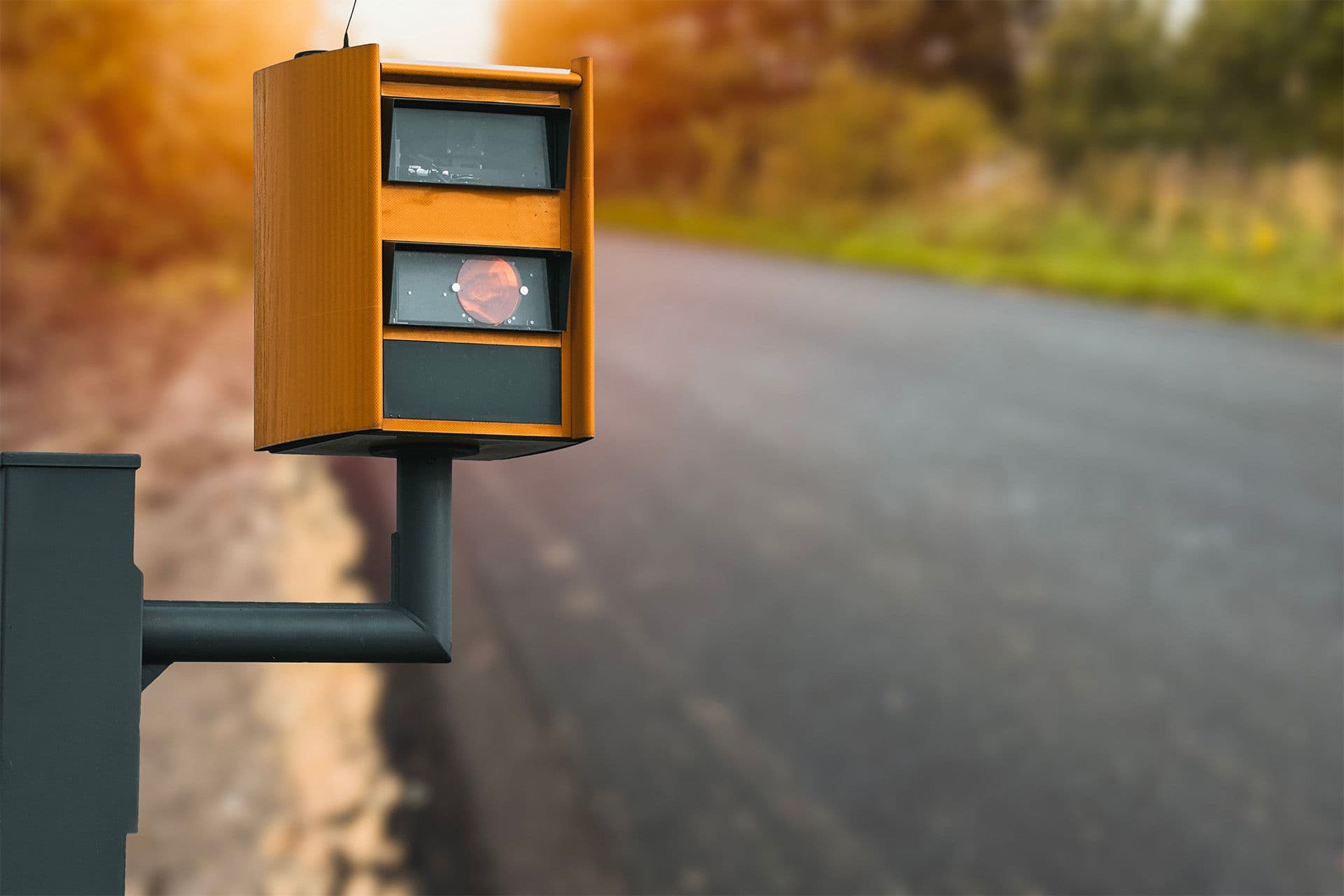
Speed cameras are now one of the primary speed enforcement tools on Polish roads. Modern devices differ significantly from older models – they can measure speed in both directions, recognize license plates, and take photos of both the front and rear of the vehicle.
It's the ability to take photos from the rear that raises the most questions among drivers. Many people assume that if they pass a speed camera and then speed up after it, they'll avoid a ticket. In practice, this is increasingly not the case.
Speed cameras utilize several speed measurement technologies. The most common are Doppler radar, laser lidar, and video systems that analyze vehicle movement. The device measures speed and automatically takes a photo when it detects exceeding the speed limit.
Modern speed cameras used in Poland can:
Many devices also operate at greater distances than older models. In practice, measurements can be taken even several dozen meters before or after passing a speed camera.
Yes. Modern speed cameras increasingly capture images from the rear of the vehicle. This is especially true for bidirectional devices that monitor traffic in both directions.
This solution is used primarily for two reasons. First, it allows for the detection of motorcycles that only have license plates on the rear. Second, it increases the accuracy of the camera, as drivers often slow down before a speed camera and accelerate immediately after passing it.
In practice, this means that even if the camera has been passed, it can still record speed and take a photo from the rear.
A photo taken from the back most often shows:
The driver's face is usually not visible in the photo. However, this doesn't mean a ticket won't be issued. The vehicle owner is obligated to identify the person driving the vehicle.
Yes, a rear-view photo can be grounds for a ticket. A legible license plate is sufficient. The vehicle owner will then be asked to identify the driver.
Under the current regulations in effect in 2026, the vehicle owner has three options:
Refusing to identify the driver can result in a hefty fine imposed by the court. In practice, the fine is often higher than a speeding ticket.
Older devices typically only take photos from the front. They were designed to capture the driver's face and license plate.
Modern speed cameras operate differently. They have additional cameras and can monitor both directions of traffic. Therefore, you shouldn't assume that passing a speed camera means you won't get a photo.
A speed camera takes a photo when a speed limit is exceeded. The device has a preset tolerance threshold, but this is not publicly disclosed. Drivers should not assume that exceeding the speed limit by a few kilometers per hour will go unnoticed.
Modern systems operate automatically, and a photo is taken a fraction of a second after a violation is detected.
The fine depends on the amount of speeding. The applicable tariffs in 2026 include:
Recidivism refers to a second speeding offence within 2 years.
Not always. A flash means the device took a photo, but it doesn't automatically mean a ticket. A speed camera can:
The fine is sent only after the photo is analyzed by the CANARD system.
There's no way to check this immediately. The information is sent to the automated traffic enforcement system. If the violation is confirmed, the vehicle owner will receive a summons by letter.
The waiting time usually ranges from a few days to several weeks.
Yes. Sectional speed measurement uses cameras at the beginning and end of the section. Depending on the configuration, the image can be taken:
The system selects the best shot to read the license plate.
The most popular (busiest) speed camera in Poland recently is the device located in Krzyszkowice near Myślenice (Lesser Poland Voivodeship) at Zakopianka.