Driving in the rain requires extra attention from the driver, but not every hazard can be detected in advance. One of the most insidious phenomena that can occur on wet roads is aquaplaning. It occurs suddenly, often during seemingly normal driving, and causes the car to stop responding as it should. For many people, it's one of the most stressful moments behind the wheel, as for a brief moment the car seems to float on water, and tire contact with the asphalt is reduced or completely lost.
In practice, this means that even a well-maintained car and a sensible driver can find themselves in a dangerous situation if road conditions favor the formation of a layer of water under the wheels. That's why it's important to understand what aquaplaning is, when it most often occurs, and how to react to avoid worsening the problem.
Aquaplaning – what exactly is it?
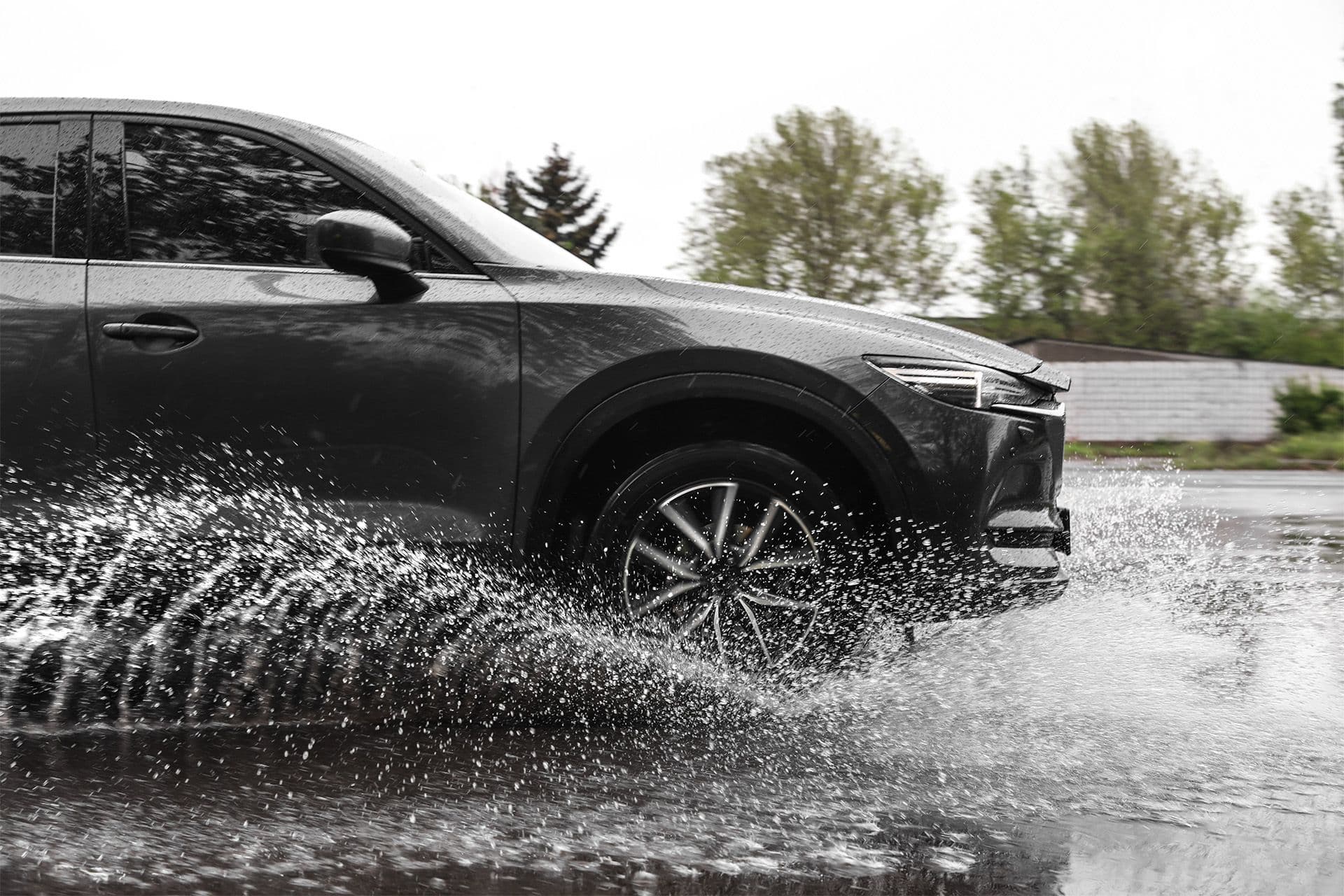
Aquaplaning, also known as aquaplaning or hydroplaning, is a phenomenon where a tire loses contact with the road surface due to a film of water. When the tread is unable to evacuate water from under the tire quickly enough, the tire begins to skid across the road instead of rolling on the asphalt. The car then lacks proper traction, and the driver loses real control over steering, braking, and acceleration.
This is precisely why aquaplaning is so dangerous. It's not just about skidding in the classic sense, but rather about the wheel momentarily "lifting" on a thin film of water. The car may then react with a delay or not at all, even though the driver is steering or applying the brakes.
How is a layer of water created between the tire and the road?
When driving on wet roads, the tire constantly cuts through water and channels it through the tread grooves. However, when there's too much water and the vehicle is traveling at higher speeds, the tread can no longer keep up with the removal. A layer of liquid then begins to form between the tire and the road, acting as a barrier separating the rubber from the asphalt.
The most dangerous areas are those where water accumulates unevenly. Ruts, dips, slippery road surfaces, or sections of road after heavy rain can significantly increase the risk of aquaplaning. Sometimes, simply driving one wheel into a deep puddle at higher speeds is enough to cause the vehicle to momentarily lose stability.
When is the risk of aquaplaning highest?
The greatest danger occurs during heavy rainfall and when there is standing water on the road. The first few minutes of rain can be particularly difficult. Water then mixes with dust, dirt, oil, and other contaminants, making the road more slippery than during a later, more even fall.
The type of road also plays a significant role. On expressways, expressways, and highways, cars travel faster, and speed is one of the main factors increasing the risk of hydroplaning. The faster a car travels, the more difficult it is for the tires to effectively evacuate water from under the wheels.
The condition of the road surface itself is also important. A road with ruts, bumps, and areas where water doesn't drain properly will be much more dangerous than well-maintained asphalt with a proper profile.
Why does aquaplaning happen? The most important causes
Aquaplaning occurs for a reason. It's the result of several factors combining to create conditions conducive to loss of traction. One of the most important is speed. When a car is driving too fast for the weather conditions, water doesn't have time to effectively clear away from under the tire. Instead, pressure builds up, which begins to "lift" the wheel off the road.
The condition of the tires is also crucial. Worn treads are much less effective at evacuating water, so tires with shallow groove depths are much more susceptible to aquaplaning. Incorrect tire pressure can also be a problem. Both too low and too high pressures impair the tire's contact with the road, which affects vehicle stability when driving in the rain.
The quality of the tire itself cannot be overlooked. Good tires, properly selected for the season and maintained in good condition, give you a better chance of maintaining control in difficult conditions. While it doesn't completely eliminate the risk, it significantly reduces it.
How to recognize aquaplaning while driving?
Aquaplaning usually occurs suddenly. The driver may feel the car has become "light," and steering responses are weaker or delayed. This is often accompanied by a feeling as if the car is sliding on a very slippery surface. Engine revs may also increase as the wheels lose resistance, and the car briefly fails to respond properly to accelerator input.
In practice, the most characteristic symptom is that the vehicle no longer behaves predictably. The steering may feel looser, braking less effective, and the lane more difficult to maintain. This is the moment when control is paramount. A sudden reaction often worsens the situation rather than saving it.
How to behave during aquaplaning?
The most important rule is: don't panic. When aquaplaning occurs, the driver should first lift off the gas pedal and allow the car to gradually decelerate. It's important to keep the steering wheel as straight as possible and avoid any jerky movements until the wheels regain contact with the road.
This is not the time to brake suddenly. If the wheels have limited contact with the road, pressing the brakes hard can further destabilize the car. Jerking the steering wheel has a similar effect. A car that regains traction after a moment may react very violently to the previous movement, increasing the risk of skidding or drifting out of its lane.
The correct reaction is to calmly release the gas pedal, maintain the lane, and wait for the tires to work properly again. This usually takes a short time, but these very seconds are crucial for safety.
What not to do when your car skids on water?
The most common mistake is reflexive, hard braking. Many drivers, sensing a loss of control, automatically press the brake pedal, hoping to quickly reduce speed. In the case of aquaplaning, this action usually doesn't help, as the wheels aren't making full contact with the asphalt anyway.
Sudden steering movements are equally dangerous. When the car begins to "float," the driver may try to immediately correct the course by swerving sharply. The problem is that once traction is regained, the car may suddenly react much more strongly than expected, leading to another skid.
Also, don't accelerate with the expectation that the car will "carve" through the water. In practice, this increases wheel speed and worsens the situation.
How to avoid aquaplaning? Practical rules
The most effective way to reduce the risk of aquaplaning is to adjust your speed to the conditions. This is a basic, yet crucial, rule. Even the best safety systems won't replace a driver's common sense if the car is traveling too fast on wet roads.
Tire condition is equally important. Regularly check the tread depth, tire pressure, and overall tire condition. Worn tires are much less effective at evacuating water, and incorrect tire pressure further reduces traction. This is especially important during the rainy and autumn/winter seasons.
Anticipating traffic situations also helps. If a driver sees ruts, large puddles, or areas of standing water on the road, they should reduce their speed beforehand. Maintaining a safe distance from the vehicle in front gives them more time to react, and smooth driving reduces the risk of sudden maneuvers.
It's also worth remembering that the driver's psychological well-being is important. It's easier to react too late in an unfamiliar car, so after picking up the car, it's a good idea to get a feel for how the brakes, steering wheel, and accelerator work before the road conditions become more difficult.
Tire and tread condition and safety on wet roads
Tire and Tread Condition and Wet Safety: Tires are the car's only point of contact with the road, so their role when driving in the rain is crucial. Even a modern car with advanced stability systems won't be completely safe if the tires can't evacuate water.
Tread depth directly affects how much water can be removed from under the wheels. The shallower the tread, the faster the risk of losing traction. Proper tire pressure is also crucial, as it determines the tire's contact patch with the road. For this reason, regular tire inspections should be treated not as a formality, but as a factor that truly impacts driving safety.
Why is driver knowledge so important?
Aquaplaning is one of those phenomena that can't be completely eliminated. However, you can significantly reduce its risk and better prepare for the appropriate response. Knowing how your car behaves on wet roads can be just as important as its technical condition.
An experienced driver isn't necessarily the one with the most miles on the clock, but rather one who recognizes danger and doesn't panic. A calm reaction, appropriate speed, and regular tire maintenance are often the deciding factors in whether a dangerous situation ends in only a moment of stress.
Aquaplaning – frequently asked questions