VIN Number – What It Means, Where to Find It and How to Check a Car's History
A VIN number (Vehicle Identification Number) is a unique 17-character code given to every car manufactured after 1981. It works like a personal ID number for a vehicle: no two cars in the world share the same VIN. With it, you can check the manufacturer, model year, trim level and history of a car, and make sure the documents match the vehicle in front of you. In this guide, we explain what each part of the VIN means, where to find it and how to check it for free.
The VIN is an international vehicle identification standard set out in ISO 3779. The manufacturer assigns it at the factory and marks it in several places on the body and in the vehicle's documents. A VIN number:
The VIN is also sometimes called the chassis number or vehicle identification number. All these terms mean the same thing.
Manufacturers put the VIN in several places to make it harder to forge. On most passenger cars, you will find it in the following locations:
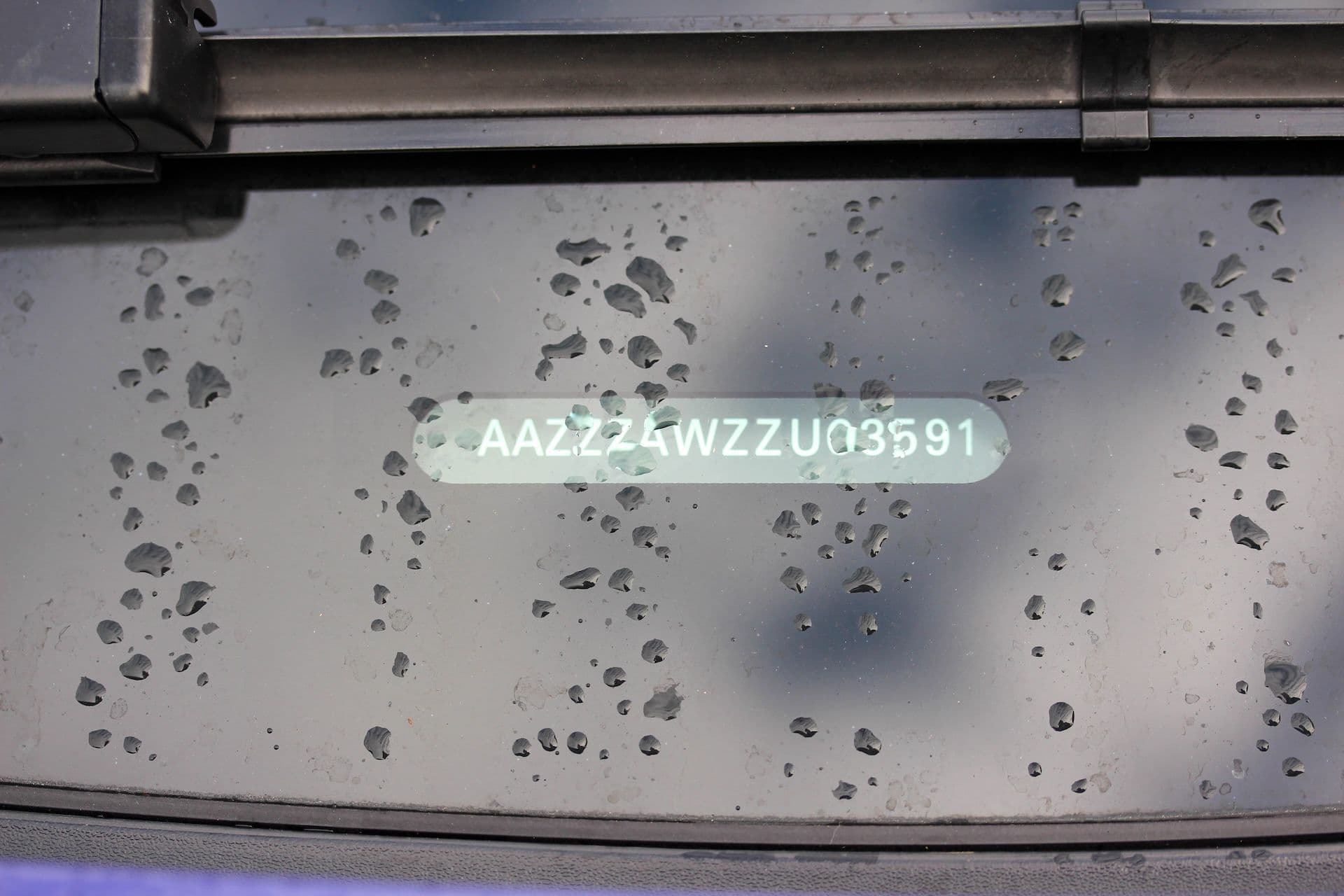
The easiest way to read the VIN is from outside the car. Stand by the front left corner of the car and look through the windscreen at the lower part of the dashboard on the driver's side. The number is stamped on a metal plate visible through the glass.
When you open the front door, you will see a sticker or identification plate on the B-pillar (between the front and rear doors). Besides the VIN, it shows the vehicle's maximum permissible weight and often the recommended tyre pressures too.
The VIN is permanently stamped on a part of the body, most often on the bulkhead separating the engine from the cabin, on the suspension strut tower or on the chassis rail. This stamped number is the hardest to forge.
In some models, including Skoda, Volkswagen, Toyota and Renault, the VIN is stamped on the floor under the passenger's or driver's seat, beneath a flap in the carpet.
Some manufacturers put the VIN in the spare wheel well or on the rear panel, under the boot carpet.
Tip: the VIN should be identical in every location. If any of them differs, shows signs of grinding or welding, or is stuck on, that is a serious warning sign when buying a used car.
In the Polish registration certificate (dowód rejestracyjny), you will find the VIN in the field marked with the letter E, described as "numer identyfikacyjny pojazdu" (vehicle identification number). The VIN also appears in:
Each of the 17 characters has its own meaning. The VIN is divided into three parts: WMI, VDS and VIS.
| Positions | Part | What it means |
|---|---|---|
| 1–3 | WMI (World Manufacturer Identifier) | Country of manufacture and vehicle manufacturer |
| 4–9 | VDS (Vehicle Descriptor Section) | Model, body type, engine, version; the 9th character is sometimes a check digit |
| 10–17 | VIS (Vehicle Identifier Section) | Model year (10th character), factory (11th character), serial number (12–17) |
The first character indicates the region or country of manufacture, and the next two the specific manufacturer. Some examples:
This section describes the model, body type, engine type, gearbox and other features. Each manufacturer uses its own coding here, so to decode it fully you need a VIN decoder for that particular brand. On cars built for the North American market, the 9th character is a check digit that helps detect an error or a forged number.
The 10th character is the model year. It does not always match the year of manufacture, because a car from the 2026 model year may have rolled off the production line as early as autumn 2025. The 11th character indicates the factory where the vehicle was assembled. The last six characters are the unique serial number of that specific car.
The model year is encoded in the 10th position. The codes repeat every 30 years, so always compare them with the car's appearance and documents.
| Character | Year | Character | Year | Character | Year |
|---|---|---|---|---|---|
| 1 | 2001 | A | 2010 | K | 2019 |
| 2 | 2002 | B | 2011 | L | 2020 |
| 3 | 2003 | C | 2012 | M | 2021 |
| 4 | 2004 | D | 2013 | N | 2022 |
| 5 | 2005 | E | 2014 | P | 2023 |
| 6 | 2006 | F | 2015 | R | 2024 |
| 7 | 2007 | G | 2016 | S | 2025 |
| 8 | 2008 | H | 2017 | T | 2026 |
| 9 | 2009 | J | 2018 | V | 2027 |
Some European manufacturers do not use this coding in the 10th position. In that case, you can check the exact year in the Polish registration certificate (field B – date of first registration) or with the brand's service centre.
The most reliable free source of information about a car registered in Poland is the government website historiapojazdu.gov.pl. To check car history in Poland, you need three pieces of information:
The report shows, among other things, the number of owners, roadworthiness test results, odometer readings recorded during inspections, OC insurance validity, theft records and whether the vehicle was registered as damaged.
For cars imported from abroad, it is worth using paid reports that pull data from European and American databases: damage history, photos from salvage auctions, mileage from service records and leasing information. Especially with cars from the USA and Canada, such a report can reveal serious damage that is not visible at first glance.
An authorised service centre can use the VIN to check the history of warranty repairs, recalls and the car's factory specification, including colour, equipment and engine version.
When you rent a car, you do not need to check the vehicle's history yourself. The MobiCars fleet consists of regularly serviced cars with a documented history, and the VIN of each car is in the vehicle documents and the rental agreement. Still, it is worth knowing where to look for it: you will need it if you have a collision and are filling in an accident statement, when reporting damage or during a roadside check abroad. You can read more about what the documents should include in our article what a car rental agreement must include, and about what to do after a road incident in our guide rental car accident – what to do.
If you are thinking of buying a car but are not sure which model would suit you best, test it in everyday driving first. Rent your chosen car from the MobiCars fleet for a few days or for a month and see how it performs in your conditions. Also read our buyer's guide – which car to choose.
A VIN number always has 17 characters: digits and capital letters, excluding the letters I, O and Q. Vehicles made before 1981 may have shorter chassis numbers.
In the Polish registration certificate, the VIN number is in the field marked with the letter E, described as "numer identyfikacyjny pojazdu" (vehicle identification number).
Yes. On the government website historiapojazdu.gov.pl, after entering the VIN number, registration number and date of first registration, you can check for free, among other things, the mileage recorded at roadworthiness tests, the number of owners and the OC insurance status.
Yes. An authorised brand service centre will give you the most accurate details of the factory equipment, paint colour and engine version. Online VIN decoders also provide general information.
Not always. The 10th character indicates the model year, which may differ from the actual year of manufacture by up to several months. You can confirm the exact date in the vehicle documents.
Do not buy the car and do not sign the agreement. A VIN mismatch may indicate that the numbers have been tampered with or that the car is stolen. If in doubt, report it to the police.
Related articles: