Your own or hire car is the best way to travel around Europe — you go when you want, stop where you want, and change your plans mid-route with no extra cost. Central and Southern Europe is closer from Poland than you might think: Croatia is 10–12 hours away, Italy 10–11, Germany just 5–6. Below you will find specific routes, practical tips and everything you need to know before crossing the border in a hire car.
Formalities before driving a hire car abroad
Before you plan your route, one important point: if you are driving a hire car, you need a written cross-border permit from the rental company. Without it, crossing the border breaches your rental agreement — and in the event of an accident, your insurance may be void.
At MobiCars, simply let us know when you book or with enough notice before your trip — we issue a permit listing the approved countries and validity dates. You can find full details in our guide to renting a car abroad.
Compulsory documents for driving abroad
- Driving licence (original)
- Rental agreement (printed or on your phone)
- Written cross-border permit (issued by the rental company)
- Green card — for travel outside the EU
- Assistance phone number from your rental agreement
Road trip to Croatia — along the Adriatic coast
Croatia is one of the most popular holiday destinations for Polish travellers — and for good reason. Crystal-clear sea, historic towns, hundreds of islands and excellent road infrastructure all make a road trip the natural choice.
Route: Rijeka → Zadar → Split → Dubrovnik
This is the classic Adriatic route — driven from north to south, picking up the most beautiful spots on the Croatian coast along the way.
What to see:
- Rijeka and Opatija — vibrant port city and elegant former Austro-Hungarian spa resort; a great starting point
- Plitvice Lakes National Park — an absolute must-see and UNESCO World Heritage Site; turquoise lakes and waterfalls cascading into each other; arrive before 8 am to beat the crowds
- Zadar — historic centre, Sea Organ (a natural instrument played by the waves), excellent seafood restaurants
- Trogir — a tiny island-town, UNESCO-listed, perfect for an afternoon stroll
- Split — Diocletian's Palace, a lively Old Town, buzzing day and night
- Dubrovnik — Old Town enclosed by city walls, views from Fort Lovrijenac, the wall walk (go at dawn or in the evening — daytime is overwhelmed with visitors)
Distance from Kraków to Dubrovnik: approx. 1,500 km (approx. 13–14 hrs)
Recommended car: SUV or estate — plenty of room for luggage, comfortable on long motorway stretches
Toll roads: Croatia has toll motorways — payment at booths, card or cash
Best time: June and September (fewer crowds, lower prices than July–August)
Planning a stopover
The drive from Poland to Dubrovnik is 1,200–1,500 km — definitely worth planning at least one overnight stop en route. A good option: Zagreb (roughly halfway from Kraków, with a lovely Old Town for an evening walk) or Split (as a base for Dubrovnik and the islands).
Road trip in Italy — Tuscany, Rome and Venice
Italy by car is a dream for many drivers. Winding roads through Tuscany, the view over Florence from Piazzale Michelangelo, crossing the Alps and arriving in Venice from the land — these are some of the most memorable moments in European road travel.
Route: Venice → Florence → Rome (or reverse
A classic Italian route comfortably covered in 7–10 days:
What to see:
- Venice — Grand Canal, Piazza San Marco, gondolas; note: you cannot drive into the historic centre — leave your car at the Piazzale Roma car park and get around on foot or by vaporetto
- Verona — Roman Arena, Juliet's House, outstanding food; a great overnight stop
- Bologna — "La Grassa" (the Fat One), arcaded streets, world-class tagliatelle al ragù
- Florence — the Uffizi, Ponte Vecchio, Piazzale Michelangelo (city panorama at sunset); watch out for ZTL zones — fines for driving in without authorisation are severe (€200–300)
- Siena and San Gimignano — the heart of Tuscany, Chianti vineyards between them; the best scenic drive in Italy
- Rome — the Colosseum, Roman Forum, Vatican, Trevi Fountain; hiring a car in Rome is unnecessary — park outside the centre and use the metro
Distance from Kraków to Venice: approx. 1,100 km (approx. 10–11 hrs)
Recommended car: compact or saloon — narrow Italian city streets demand a manoeuvrable vehicle
Toll roads: Italy has toll motorways (autostrade) — payment at booths by card or cash
ZTL (Zona Traffico Limitato): restricted traffic zones in historic city centres — check before you drive in; fines run into hundreds of euros
Vignette rules and crossing the Alps
Italy itself has no vignette, but if your route takes you through Austria or Slovenia, one is required:
- Austria: digital vignette or sticker, buy at asfinag.at
- Slovenia: sticker, buy at the border or online at evinjeta.si
Road trip in Germany — Bavaria, fairytale castles and the Autobahn
Germany offers a fascinating combination: stretches of unlimited motorway, storybook castles, excellent beer in every city and outstanding road infrastructure. Bavaria is particularly scenic — the classic destination for lovers of mountain landscapes and historic architecture.
Route: Munich → Neuschwanstein → Romantic Road → Heidelberg
What to see:
- Munich — Marienplatz, the Englischer Garten (one of the largest city parks in Europe), beer gardens, BMW World; note: the city centre requires an Umweltplakette (environmental badge) — check before driving in
- Neuschwanstein Castle — one of Europe's most beautiful castles, an absolute must; go early in the morning or book tickets online in advance
- Romantic Road (Romantische Straße) — 460 km from Würzburg to Füssen through fairytale towns: Rothenburg ob der Tauber (best-preserved medieval town in Germany), Dinkelsbühl, Nördlingen (a town built inside a meteor crater)
- Heidelberg — castle overlooking the Old Town, the Neckar river, Germany's most romantic city
- Dresden — if you return via the east: the rebuilt Frauenkirche, the Zwinger palace, the Old Masters Gallery
Distance from Wrocław to Munich: approx. 600 km (approx. 5.5–6 hrs)
Recommended car: saloon or estate — ideal for Autobahn driving and longer trips with luggage
Motorway vignette: Germany does not require one
Umweltplakette: environmental badge required in many city centres (Munich, Frankfurt, Cologne, Berlin) — buy online at umwelt-plakette.de before you travel
The Autobahn — what you need to know
Germany is the only country in Europe with stretches of motorway without a speed limit. In practice, however, most sections have a 120–130 km/h advisory or mandatory limit. Remember: keep right, overtake left only — strictly enforced. Speed limits at roadworks are taken very seriously and speed cameras are everywhere.
Other routes worth considering
Austria and Slovenia — the Alps and mountain lakes
Salzburg, Vienna, Lake Bled in Slovenia and Alpine passes — all reachable in 6–8 hours from southern Poland. The route Kraków → Vienna → Salzburg → Lake Bled → Ljubljana is one of the most beautiful road trips in Central Europe.
Distance from Kraków to Salzburg: approx. 650 km (approx. 6.5 hrs)
Vignette: Austria and Slovenia both require one — buy before you cross the border
Recommended car: SUV or crossover — Alpine roads can be demanding
Czech Republic and Slovakia — perfect for a long weekend
Prague, Brno, the Slovak Tatras and spa towns — all within 3–5 hours' drive from southern Poland. The loop Kraków → Brno → Prague → Bratislava → Slovak Tatras → Kraków is a classic route you can comfortably cover in 5–6 days.
Distance from Kraków to Prague: approx. 540 km (approx. 5.5 hrs)
Vignette: Czech Republic and Slovakia both require an electronic vignette — buy online before you cross
Recommended car: estate or SUV
Which car should you choose for a European road trip?
The choice of car depends on the route, number of passengers and amount of luggage:
Destination - Recommended car - Why
- Croatia, Italy (long route) - Estate, SUV - Large boot, motorway comfort
- Germany, Austria (fast motorway driving) - Saloon, estate - Stability at higher speeds
- Tuscany, Italian hilltowns - Compact - Narrow streets, easier parking
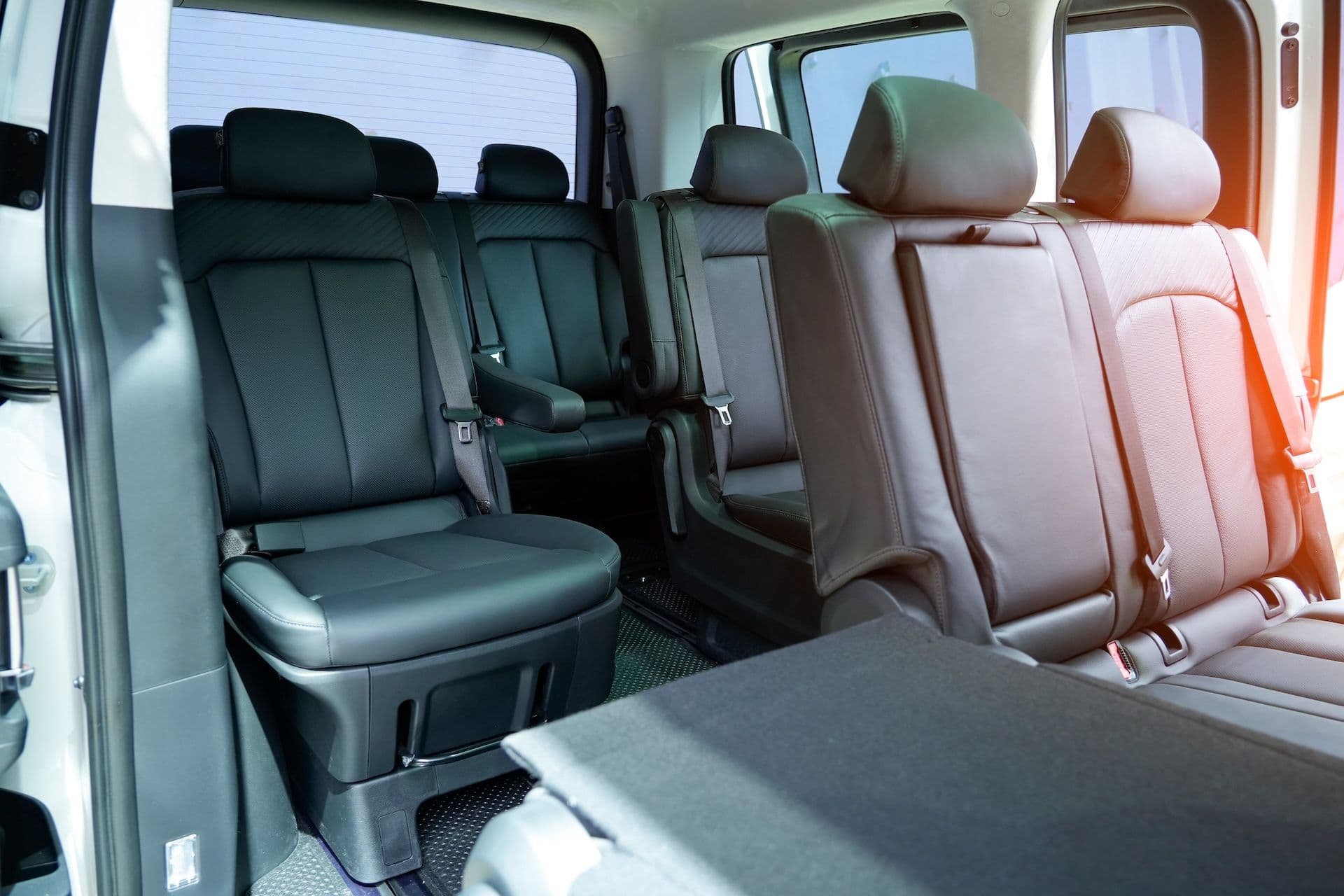
- Family trip with children - SUV, 7-seat minivan - Space, child seat, luggage room
- Couple, shorter trip - B-segment hatchback - Economical, comfortable, adequate boot
At MobiCars all cars are available with no deposit — no blocking thousands of zloty on your card for the duration of your trip.
FAQ — road trip through Europe