Just a few years ago, driver assistance systems were associated primarily with more expensive models and high-end equipment. Today, they are increasingly becoming a common part of everyday motoring. Many of these solutions have become standard in new cars, and drivers have begun to treat them not as technological additions but as real driving aids. This is especially important in times of increased traffic and the ever-increasing number of stimuli to respond to.
ADAS systems were created precisely to relieve the driver in certain situations, improve safety, and help them detect hazards more quickly. They don't drive the car, but they can warn, correct the trajectory, and sometimes even react faster than the driver. However, to properly assess their capabilities, it's worth first understanding what they actually are and how they work.
What is ADAS?
The acronym ADAS stands for Advanced Driver Assistance Systems. This is a group of technologies that analyze the situation around the vehicle and assist the driver during everyday driving. Their purpose is not to replace humans, but to support them in situations where quick reactions, precise distance assessment, or constant monitoring of the vehicle's surroundings are crucial.
In practice, ADAS encompasses many functions operating in parallel. Some are responsible for lane monitoring, others track vehicles ahead, and still others detect obstacles, pedestrians, or cars in the blind spot. The entire process is based on the continuous analysis of data collected by the vehicle while driving.
This is what distinguishes ADAS from simpler safety systems that have been around for years. Classic solutions usually react only when something is already happening, while driver assistance systems try to recognize risks earlier and react appropriately.
Why has ADAS become standard?
The growing popularity of these systems isn't solely due to the trend toward new technologies. The reason is much more practical. Modern cars navigate increasingly complex environments: traffic jams, fast-paced highways, distraction, driver fatigue, and the high number of maneuvers in cities make electronic support a real necessity.
Car manufacturers are developing ADAS systems primarily because they help mitigate the consequences of human error. Human error is one of the most common causes of collisions and accidents. If a car can warn of insufficient following distance, detect unintentional lane departures, or initiate emergency braking, safety is significantly improved.
Changes in safety regulations and standards are also significant. In many new cars, some assistance features are no longer a luxury addition, but are now expected features. Drivers have quickly become accustomed to the fact that a modern car not only drives but also actively helps maintain control of the situation.
How do ADAS systems “see” the road?
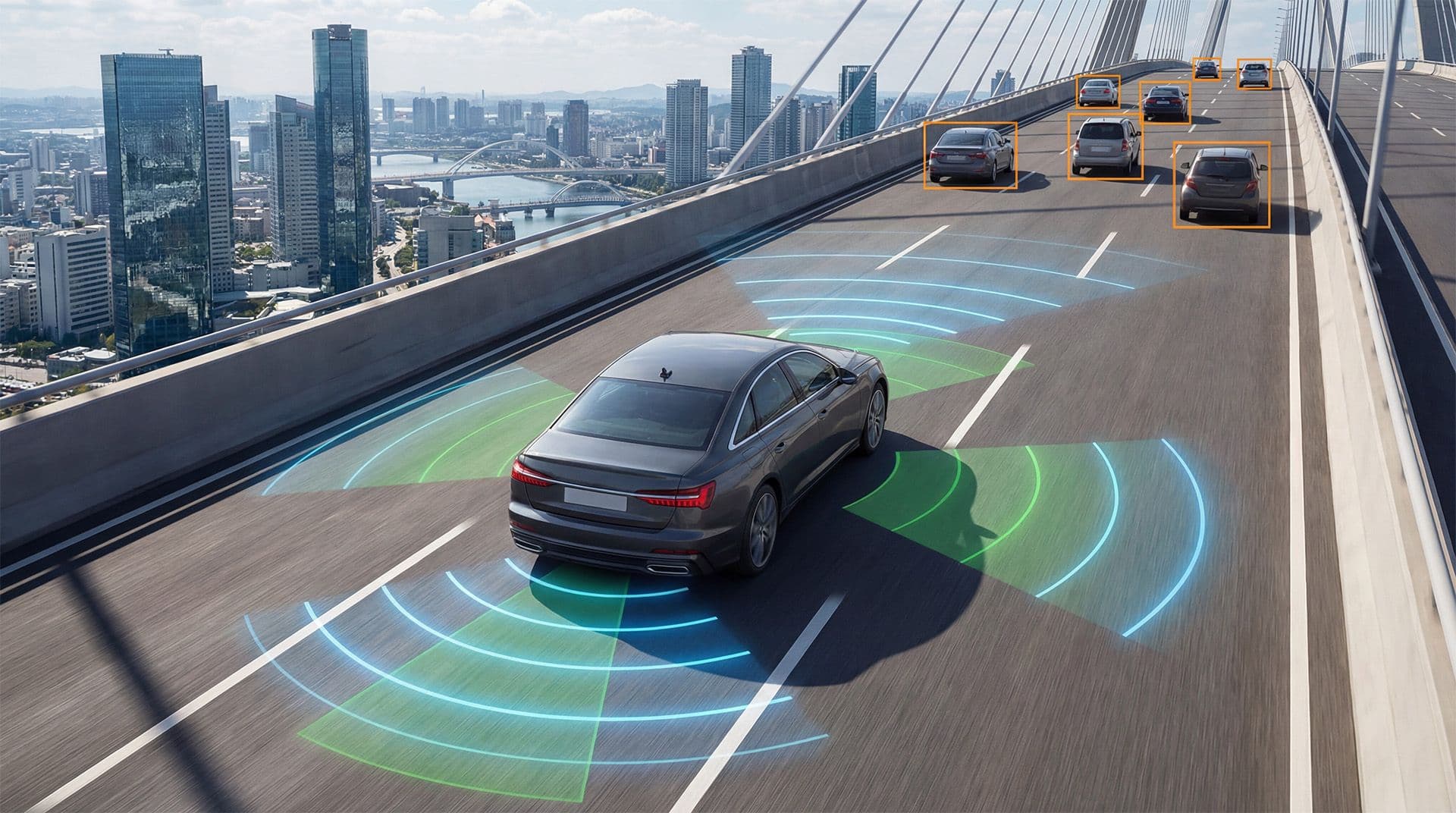
The basis of ADAS systems is cameras, radars, and various sensors located in various parts of the vehicle. Each of these elements is responsible for collecting specific information and then transmitting it to the control computer, which analyzes the situation in real time.
Cameras are most often placed behind the windshield. They read road markings, recognize vehicle shapes, road signs, and obstacles appearing in front of the car. Radars, usually mounted on the front and rear of the car, measure the distance and speed of other objects, allowing the system to assess whether the car is approaching an obstacle too quickly. Additional sensors support the entire system when parking, changing lanes, or driving in congested traffic.
Most importantly, however, the car does not rely on a single data source. ADAS's effectiveness stems from the simultaneous interaction of multiple devices. The camera can "see" the lane line, the radar confirms the presence of a vehicle ahead, and the controller combines this information with the vehicle's current speed and position. Only then does the system decide whether to warn the driver or activate a specific function.
How does ADAS work in practice?
To the driver, the operation of these systems is often almost invisible, as most processes occur in the background. The car constantly monitors its surroundings, analyzes its lane position, monitors the distance from other vehicles, and checks for situations requiring attention. When everything is working properly, the system remains unobtrusive. However, when a hazard arises, it springs into action.
First, a warning is usually issued. This can be an audible warning, a message on the screen, an icon on the dashboard, or a subtle vibration of the steering wheel. If the driver doesn't react, some functions can progress to the next stage and take action independently. Depending on the situation, this can include correcting the driving path, braking, or activating emergency braking.
This means that ADAS systems work best not as a "flashy novelty," but as a silent support system that only comes into play when it's actually needed. In everyday driving, it's not about the driver constantly thinking about electronics, but about the car being able to help at the crucial moment.
The most important functions of ADAS systems
Modern driver assistance systems include many solutions, but several of them appear most frequently today and have the greatest impact on driving safety and comfort.
Lane assistant
One of the most recognizable features is lane assist. The system monitors road markings and ensures the vehicle is properly positioned between the lines. If the vehicle begins to drift out of its lane without the indicator activated, the system can first warn the driver and, in some models, even gently correct the vehicle's trajectory.
This feature is particularly useful on longer journeys, when fatigue or momentary distraction can cause the driver to react too late. The function does not take over the steering, but helps detect unintentional lane changes more quickly.
Blind spot monitoring
The blind spot is an area that isn't clearly visible in the mirrors, and this is where other cars often appear when changing lanes. The blind spot monitoring system uses side sensors to warn the driver when a vehicle is nearby that might be invisible to the naked eye.
In practice, the driver sees a signal in the mirror or hears a warning when attempting a maneuver that could lead to a collision. This is a feature that is particularly appreciated in city traffic and on multi-lane roads.
Forward Collision Warning System
This feature analyzes the distance to the vehicle in front and the speed of the vehicle's approach. If the system determines that the risk of a collision is increasing, it alerts the driver. The time to react can be very short, so many vehicles provide a clear audible or visual warning.
This system not only improves safety but also acts as a preventative measure. Drivers become more aware of their distance and anticipate traffic situations, resulting in a smoother driving style.
Emergency braking
Automatic emergency braking is one of the most important safety features in modern cars. If the driver doesn't react in time, the system can automatically initiate braking to mitigate the effects of a collision or avoid it altogether.
This feature is especially valuable in emergency situations when fractions of a second count. A person might miss an obstacle, look away for a moment, or simply react with a delay. The electronics work faster because they constantly analyze their surroundings.
How does ADAS affect driving comfort?
While safety is often the focus, ADAS systems also improve the comfort of everyday driving. Drivers who don't have to constantly monitor every small element of their surroundings without any assistance drive more calmly and experience less fatigue. This applies to both city driving and longer journeys.
In traffic jams, assistance when starting and maintaining a distance is useful. On expressways, lane assist and surrounding area monitoring prove helpful. In urban maneuvers, sensors and systems that warn of vehicles and obstacles around the car are crucial. All this makes driving more predictable and less mentally taxing.
Of course, this doesn't mean that drivers can relax and lose focus. Rather, it means that some routine tasks are supported by systems that constantly monitor the road and react when a driver might miss something.
Limitations of ADAS systems – what should you remember?
Despite their effectiveness, ADAS systems are not infallible. Their operation depends on the quality of the data reading, which can be impaired by weather conditions, dirty windshields, damaged radar, or illegible road markings. Dense fog, snow, heavy rain, or blinding light can limit the effectiveness of cameras and sensors.
In practice, this means that even a modern car equipped with advanced safety systems still requires the driver's full attention. ADAS is not an autopilot. It is a support, not a replacement for a human driver. The driver should be familiar with the car's capabilities, but also understand its limitations.
This is why it's so important not to treat these solutions as a guarantee that the car will handle every situation on its own. Technology can help, warn, and correct errors, but the responsibility for driving still rests with the person behind the wheel.
Camera and sensor calibration – why does it matter?
ADAS systems only function properly when their components are properly aligned and calibrated. After a windshield replacement, bodywork repairs, a collision, or work on the bumper area, cameras and radars may need to be realigned. Even a slight deviation can cause the system to misread distances or incorrectly recognize the vehicle's position in relation to the lane.
This is a topic that many drivers ignore, as the car often "drives normally" even after repairs. The problem, however, is that an incorrectly calibrated system can operate imprecisely precisely when it's needed most. Therefore, for cars equipped with modern assistance systems, simple mechanical or bodywork repairs are not enough. Restoring the electronics to proper operation is equally important.
ADAS and video recorder – they are not the same
Many drivers confuse assistance systems with dashcams. This is because both solutions can use the image from the front of the vehicle, but their functions are completely different. A dashcam is primarily used to record driving. It can be useful for recording road incidents, but it doesn't analyze the situation with the same precision as a factory ADAS system.
ADAS is an integrated technology that works with the vehicle's electronics. It not only "sees" the image but also interprets data from multiple sources simultaneously and can trigger a specific response from the car. This is the difference between simple recording and real-time active driver support.
Is it worth having ADAS in your car?
For many drivers today, the answer is simply yes. ADAS systems are no longer just a bonus for those interested in technological innovations. They have become practical aids that truly make a difference in everyday driving. They help on the road, in the city, when changing lanes, in traffic jams, and in emergency situations when every second counts.
The biggest advantage isn't that the car does anything for the driver, but that it can notice more and react faster. A well-functioning assistance system can not only improve travel comfort but, above all, reduce the risk of errors that would otherwise have serious consequences.
The future of ADAS – a step towards increasingly intelligent cars
The development of driver assistance systems clearly demonstrates the direction in which modern motoring is heading. Cars are becoming increasingly better at analyzing their surroundings, predicting risks, and supporting human drivers. It is precisely these solutions that lay the foundations for more advanced levels of driving automation.
While this doesn't mean full autonomy is available in every car every day, it's clear that ADAS is one of the most important steps in this transformation. From the driver's perspective, however, the most important thing is that this technology is already significantly improving safety and enabling modern cars to be more aware of what's happening around them.
ADAS – frequently asked questions